 Pest Control Services
Every June, as the first rains hit Hyderabad, something else arrives along with the relief from the summer heat — pests. Cockroaches crawl out from kitchen drains. Mosquitoes breed in overnight puddles. Termites silently tunnel through damp wood. And most homeowners don't realize the scale of the problem until it's already an infestation.
If you're a homeowner or apartment resident in Hyderabad, monsoon pest control isn't optional — it's essential. The city's combination of heavy rainfall, high humidity, and warm temperatures creates a near-perfect ecosystem for household pests to multiply rapidly.
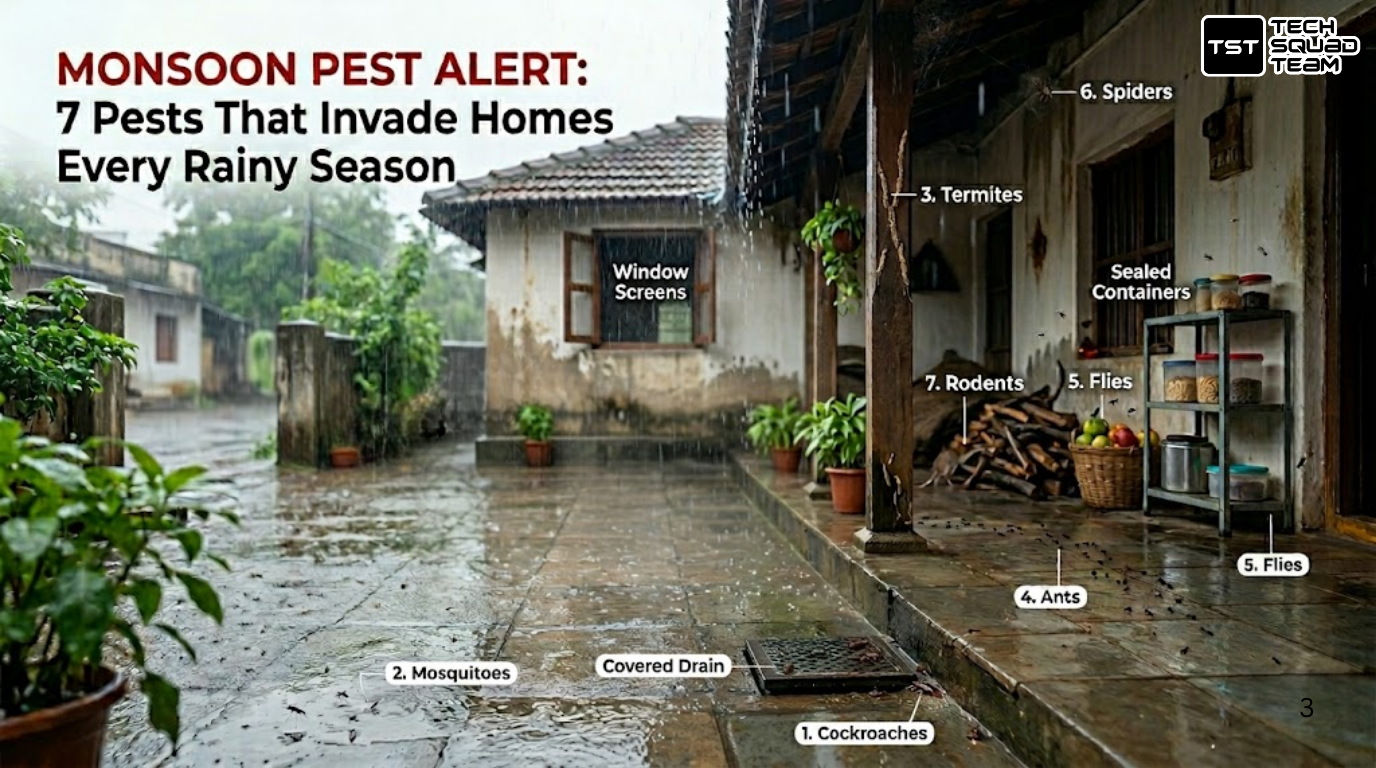
This guide breaks down the 7 most common rainy season pests in Hyderabad, explains why they become aggressive during monsoon, and gives you practical, actionable steps to protect your home — before the damage is done.
If you've already spotted signs of an infestation, professional pest control services from TechSquadTeam can help you assess the situation quickly with a free monsoon inspection.
Monsoon doesn't just bring rain — it disrupts the underground and outdoor habitats where pests normally live.
When soil becomes waterlogged, ants, cockroaches, and rodents are forced out of their burrows and into your home searching for shelter. Stagnant water collects in planters, AC drip trays, and clogged drains — giving mosquitoes everything they need to breed within 48 hours.
High indoor humidity softens wood, weakens wall structures, and creates damp corners that termites and fungi thrive in. Warm, moist air accelerates pest breeding cycles — some species double their population in under two weeks during monsoon conditions.
In Hyderabad specifically, the monsoon season runs roughly from June through September, with peak humidity levels often exceeding 80–90%. Older apartments and standalone homes with drainage issues are particularly vulnerable.
The pattern is predictable. The response needs to be proactive.
Here is a clear overview of the most common monsoon pests, the damage they cause, and the warning signs to watch for:
|
Pest |
Primary Entry Points |
Key Damage |
Early Warning Sign |
|
Cockroaches |
Drains, pipe gaps, vents |
Food contamination, allergens |
Musty odor, droppings near sink |
|
Mosquitoes |
Open windows, stagnant water |
Disease transmission (dengue, malaria) |
Bites, buzzing near water sources |
|
Termites |
Damp wood, foundation cracks |
Structural wood damage |
Mud tubes, hollow-sounding wood |
|
Ants |
Gaps in walls, door frames |
Food spoilage, electrical damage |
Trails near kitchen or sweet foods |
|
Flies |
Open food, garbage, drains |
Bacterial contamination |
Clustered near bins or kitchens |
|
Spiders |
Corners, vents, cluttered storage |
Bites, web buildup, fear |
Webs in undisturbed corners |
|
Rodents |
Broken vents, under doors |
Structural damage, disease |
Gnaw marks, droppings, scratching sounds |
Cockroaches are the most reported pest during Hyderabad's rainy season, and for good reason. They thrive in warm, damp environments — exactly what a monsoon kitchen or bathroom provides.
German and American cockroaches (the two most common species in Hyderabad apartments) hide in drain pipes, behind refrigerators, and inside electrical panels during the day. At night, they contaminate food surfaces, spread bacteria like Salmonella, and trigger asthma and allergies.
The danger isn't just one cockroach — it's the colony behind it.
A single female cockroach can produce up to 300 offspring in a year. During monsoon, breeding cycles accelerate. By the time you see cockroaches in your living area, you likely have hundreds hiding in the walls.
What to do: Seal drain gaps with mesh covers. Fix leaking pipes immediately. Keep kitchen counters dry. For persistent infestations, cockroach control treatment with gel bait application is one of the most effective long-term solutions.
Also Read: Cockroach Control in Hyderabad: What You Need to Know
Mosquitoes are not just an annoyance during monsoon — they're a genuine public health threat in Hyderabad. The city has historically seen spikes in dengue, chikungunya, and malaria cases every monsoon season.
Female Aedes mosquitoes need only a tablespoon of stagnant water to lay eggs. Flower pots, cooler trays, AC condensation drip trays, and clogged gutters all become breeding grounds within 24–48 hours of rainfall.
What to do: Empty all standing water sources twice weekly. Use window mesh screens. Install mosquito nets for bedrooms. For outdoor breeding control around your apartment complex or home compound, professional fogging and larvicide treatment offers wider coverage than household sprays. Regular removal of stagnant water and targeted professional interventions form the most effective mosquito pest control strategy.
Also Read: How To Choose Best Mosquito Pest Control Services
Termites are most active during and right after heavy rainfall. Subterranean termites — the most destructive species found in Hyderabad — travel through soil and enter homes through foundation cracks and damp wooden frames.
Once inside, they consume wood from the inside out. By the time you notice hollow-sounding furniture or bubbling paint, significant structural damage has often already occurred.
The key sign homeowners miss: Mud tubes along walls or wooden beams. These are termite travel tunnels — a clear indicator of an active infestation that needs immediate professional assessment.
What to do: Keep wooden furniture away from walls during monsoon. Ensure good ventilation to reduce indoor humidity. Schedule a termite inspection and treatment before the peak season — not after the damage appears.
Also Read: Fast & effective termite control in Hyderabad – Don’t Wait until It’s Late
Ants invade Hyderabad homes during monsoon when floodwater displaces their outdoor colonies. Fire ants, sugar ants, and carpenter ants are the most common species spotted during the rainy season.
While sugar ants are mostly a kitchen nuisance, carpenter ants can damage damp wood structures. Fire ants pose stinging risks, especially in homes with children or pets.
What to do: Store all sugar, grains, and open foods in airtight containers. Seal gaps around door frames and window sills. A perimeter spray treatment around your home's base is effective for colony displacement. Following these ant control measures ensures your home remains safe and pest-free throughout the monsoon season.
Houseflies and fruit flies multiply at accelerated rates during Hyderabad's monsoon months due to the abundance of decaying organic matter from waterlogged garbage and open drains.
Flies don't just land on food — they regurgitate on it. Every surface a fly lands on has a real risk of bacterial contamination, including pathogens that cause typhoid and dysentery.
What to do: Dispose of kitchen waste daily. Keep garbage bins sealed and away from cooking areas. Install fly screens on kitchen windows. Use UV fly traps for indoor control.
Most spiders found in Hyderabad homes are non-venomous and actually prey on other insects. However, monsoon drives them indoors in larger numbers, and some species — including the Indian black widow — are present in the region.
Spiders prefer undisturbed corners, storage boxes, under beds, and behind rarely-moved furniture. The bigger risk isn't the spider itself but what their presence signals: there are enough insects inside your home to sustain a spider population.
What to do: Declutter storage areas. Shake out clothing and shoes before wearing them during monsoon. Check behind furniture periodically. A general pest treatment that reduces the overall insect load will naturally reduce spider activity.
Rats and mice are forced indoors during heavy rainfall as their outdoor burrows flood. In Hyderabad, Norway rats and roof rats are common, and both species are carriers of serious diseases including leptospirosis and hantavirus.
Rodents are not just a hygiene problem — they gnaw through electrical wiring, insulation, and even plastic water pipes. A pair of rats can produce 40–60 offspring per year.
The warning signs: Gnaw marks on food packaging, droppings near kitchen baseboards, scratching sounds inside walls or ceilings at night.
What to do: Block entry points under doors and around utility pipes. Store food in rodent-proof containers. Professional rodent control using bait stations and exclusion techniques is significantly more effective and safer than over-the-counter traps alone.
Also Read: Complete Guide to Pest Control Services in Hyderabad
Here's a fast-reference checklist for Hyderabad homeowners before monsoon season begins:
Before the Rains Arrive
During Monsoon
After Heavy Rainfall
Preventing a monsoon pest infestation is always cheaper and easier than treating one. Here are six high-impact habits that genuinely work:
DIY sprays and home remedies have their place — but they treat the symptom, not the source.
Over-the-counter sprays kill visible pests but do nothing about colonies hidden inside walls, beneath flooring, or in drainage systems. Worse, overuse of chemical sprays without proper safety protocols creates health risks for children, pets, and elderly family members.
Professional pest control in Hyderabad brings three things that DIY simply can't match:
TechSquadTeam's trained technicians understand Hyderabad's local pest behavior patterns and the building types most common across the city — from older standalone homes in Secunderabad to modern apartment complexes in Gachibowli and Kondapur.
According to the National Vector Borne Disease Control Programme, Hyderabad consistently records one of the higher rates of monsoon-related vector-borne disease in South India — a direct consequence of inadequate mosquito and pest control measures in residential areas.
Don't wait until the infestation becomes severe. Contact a professional immediately if you notice any of the following:
Any one of these signs warrants a professional inspection — not a can of spray.
Monsoon pest control in Hyderabad isn't about overreacting — it's about being prepared. Every year, thousands of homeowners deal with infestations that could have been prevented with a single pre-season treatment and basic household discipline.
The 7 pests covered in this guide — cockroaches, mosquitoes, termites, ants, flies, spiders, and rodents — are predictable. They arrive every rainy season. And they cause real damage: to your health, your food, and your home's structure.
Don't let the monsoon turn your home into their habitat.
TechSquadTeam offers expert, Hyderabad-specific pest control solutions tailored to the unique challenges of monsoon season. From targeted cockroach gel treatments to comprehensive termite barriers and mosquito fogging, their certified technicians handle it all — safely and efficiently.
Protect your home before the peak season hits. TechSquadTeam is offering free monsoon pest inspections for Hyderabad homeowners and apartment residents — with limited slots available.
Book Your Free Inspection at TechSquadTeam.com
Don't wait for the pests to find you first.
The most common monsoon pests in Hyderabad are cockroaches, mosquitoes, termites, ants, houseflies, spiders, and rodents. They enter homes due to waterlogged outdoor habitats, high indoor humidity, and stagnant water — all of which are typical monsoon conditions in the city.
Cover kitchen drains with mesh at night, fix all leaking pipes, keep counters dry, and store food in airtight containers. For established infestations, professional gel bait treatment from a certified pest control company in Hyderabad offers the most effective, long-lasting results.
Yes, absolutely. Hyderabad sees sharp spikes in dengue, malaria, and chikungunya every monsoon. Empty stagnant water every 48 hours, use window screens, and consider professional larvicide treatment for larger outdoor areas around your home or apartment complex.
Yes. Subterranean termites are most active post-rainfall and can cause significant structural damage within weeks if left untreated. Mud tubes on walls and hollow-sounding wood are early signs. A professional termite inspection before monsoon peak is strongly recommended for Hyderabad homeowners.
DIY methods like sealing cracks, covering drains, and removing standing water help reduce pest entry but rarely address hidden colony sources. For full-season protection in Hyderabad's high-humidity monsoon conditions, professional pest treatment is significantly more effective and safer.
One pre-monsoon treatment in May–June, followed by a mid-season check in August, is the recommended schedule for Hyderabad homes. High-risk properties — older buildings, ground-floor apartments, homes near drains — may benefit from quarterly treatments for complete monsoon pest control coverage.

TechSquadTeam Ground Floor, Plot No 118 Neil Rao Towers, Road No 3, EPIP Phase 1, Whitefield Road

Leave A Comment
Your email address will not be published. Required fields are marked *