You walk into a cool room; you immediately sense the AC aura, and there it is. A faint musty smell, a sneeze you cannot explain, and maybe a headache that shows up only indoors. So you start wondering, can dirty AC vents make you sick, or are you imagining it?
The honest answer is yes, under the right conditions. Dirty AC vents aren't the real enemies, but when dust, moisture, and mold build up inside them, they can quietly trigger real symptoms. This guide explains what actually causes that, the signs worth watching, who is most at risk, and exactly when to clean the vents yourself versus calling a professional.
Yes, dirty AC vents can make you sick when they harbor mold, dust mites, or bacteria. These contaminants circulate through the air and can trigger allergies, congestion, and breathing problems.
Here's the part most articles skip. Dust sitting on a vent surface isn't automatically a hazard. The trouble starts when that dust meets moisture and the vent turns into a home for living contaminants.
Once mold spores or dust mites move in, your AC stops being a cooling system and becomes a delivery system, pushing those particles into the air you breathe every time it runs. The US EPA makes a useful point here: dirty ducts are just one of several possible sources of indoor particles, and it's visible mold or contamination that should actually prompt you to act.
Dirty AC vents collect dust, mold spores, dust mites, pollen, pet dander, and bacteria. Warm, humid conditions inside the system let these contaminants grow and spread through your home.
Leave vents alone for long enough and a few unwelcome things pile up:
• Mold and mildew. They feed on the moisture that condenses inside cooling systems, and a humid Indian summer is perfect for them.
• Dust mites. They live off trapped dust and shed allergens that irritate your airways.
• Pollen and pet dander. Pulled in, settled, and recirculated with every cycle.
• Bacteria. They collect in stagnant moisture and clogged drains.
It usually starts with a blocked, dusty filter, which chokes airflow and dirties the air at the same time. If you want the mechanics behind that, our guide to common AC problems breaks down how one clogged filter drags down the whole system.
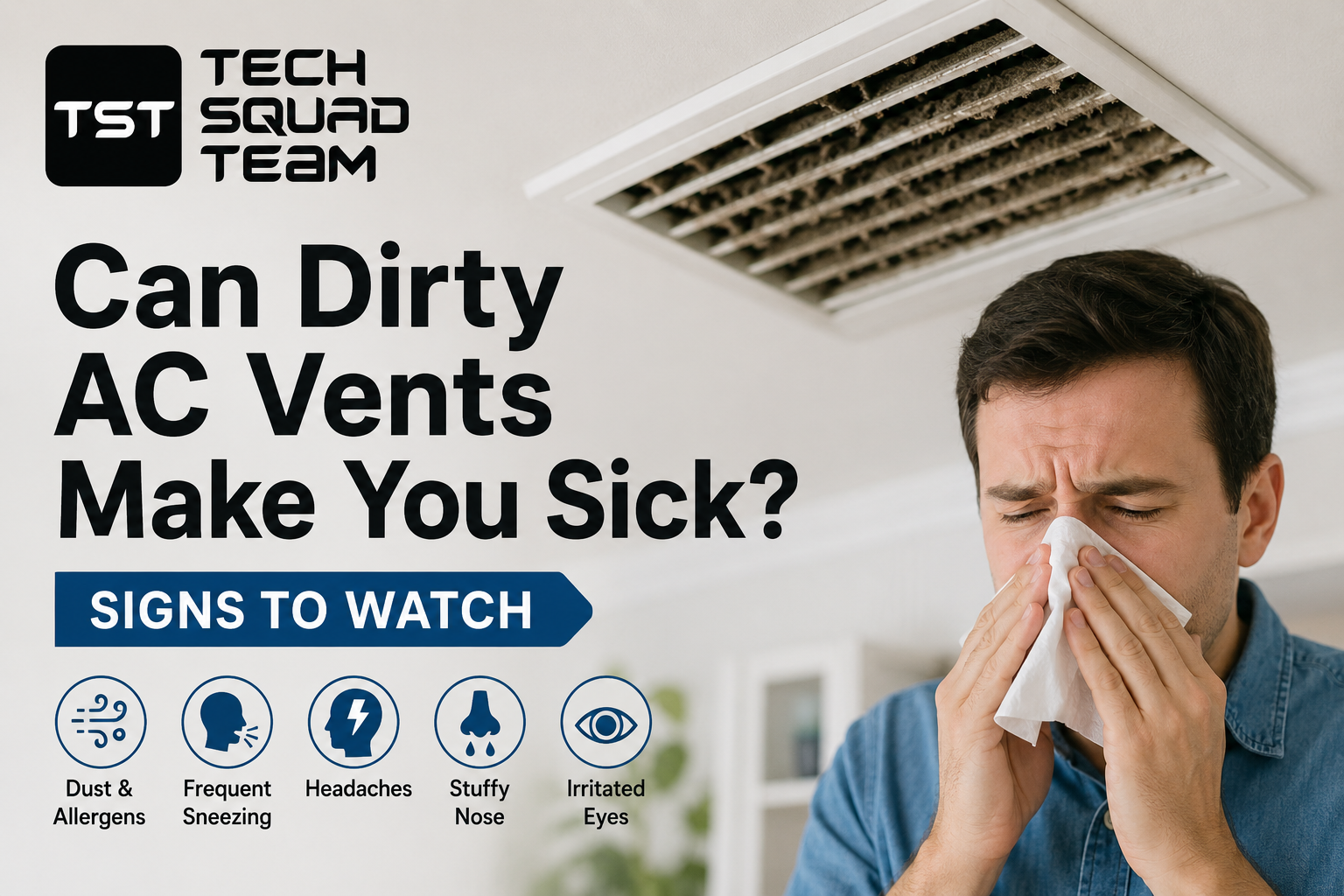
Symptoms of dirty AC vents include sneezing, coughing, a sore throat, congestion, headaches, and worsened allergies or asthma, often appearing only indoors and easing when you leave.
The giveaway is timing. If these hit mainly at home with the AC running, the vents are a fair suspect:
• Frequent sneezing, coughing, or a runny nose
• Itchy or watery eyes and a scratchy throat
• Nasal congestion or sinus pressure
• Headaches or odd tiredness indoors
• Flare-ups of asthma or existing allergies
A musty smell when the AC switches on is one of the clearest red flags. That earthy odor usually means moisture, and probably mold, somewhere in the system. It's rarely just surface dust.
Children, older adults, and anyone with asthma, allergies, or a weakened immune system are most affected by dirty AC vents, since their airways react more strongly to airborne contaminants.
People react differently. A healthy adult might shrug off mild contamination while a sensitive household feels it almost right away. The ones who notice fastest:
• Children, whose airways are still developing
• Older adults and anyone with respiratory conditions
• People with asthma, allergies, or sinus trouble
• Anyone with a weakened immune system
This hits harder in India, where families run ACs for long hours through hot, humid months. Steady upkeep keeps the air cleaner, which is exactly why AC servicing matters for homes with vulnerable members.
To clean dirty AC vents, switch off the unit, remove and wash the filter, wipe vent covers and grilles, vacuum visible dust, and call a professional if you spot mold or a musty smell.
Some of this is safe to do yourself. Some aren't. Here's the routine for the parts you can handle:
1. Switch off the AC at the power source before you touch anything.
2. Take out the air filter and wash it, or swap it if it's badly clogged.
3. Wipe the vent covers and grilles with a damp cloth and mild cleaner.
4. Vacuum visible dust from the vent openings you can reach.
5. Let everything dry fully before you switch the unit back on.
Washing the filter about once a month is the single most effective habit you can build. Our maintain your air conditioner guide walks through the rest, from coils to condensate drains.
One caution worth repeating: do not use bleach or vinegar inside ducts, and avoid opening up internal components yourself. Done wrong, cleaning can release more dust than it removes, which the EPA specifically warns about.
Call a professional when you see visible mold, smell a persistent musty odor, notice weak airflow, or have recurring allergy symptoms. These point to contamination inside parts you cannot safely reach.
Book a service if you spot any of these:
• Visible mold on vents, grilles, or around the unit
• A musty smell that keeps coming back after surface cleaning
• Weak airflow or cooling that has clearly dropped off
• Symptoms that return no matter how often you change the filter
Trained technicians can clean coils, blades, blower wheels, and drain trays safely, the deep parts no damp cloth will ever reach. They'll also track down the moisture source feeding the mold, so it doesn't just grow back a month later. Worth knowing too: the US Department of Energy recommends replacing HVAC filters every one to three months to keep the system clean and efficient in the first place.
If your AC smells musty or you've been sneezing indoors, don't wait it out. Start with the filter, clean the vent covers, and watch whether the symptoms ease. If the smell or the weak airflow sticks around, that's your cue to bring in a professional before mold works its way deeper into the system.
For a deep clean that reaches the parts you can't, book a service with TechSquadTeam and breathe easier knowing your AC is pushing out clean air, not contaminants.
Wash or replace the filter monthly, and book a deeper professional clean about twice a year, more if you run the AC hard. Regular AC services keep airflow clean and efficient.
A musty smell usually means moisture and probably mold inside the system. For split units, this often needs split AC servicing to clean the coils and drain properly.
Yes. Mold spores and dust mites from dirty vents can worsen both. Seasonal summer AC maintenance helps cut these triggers before peak usage.
It is, once there are real signs of contamination or weaker cooling. Professional AC cleaning reaches coils and drains home cleaning can't, and stops mold from returning.
You can safely wash filters and wipe vent covers, but leave internal parts to the experts. These AC maintenance tips cover what's fine to do at home.
Often, yes. Clogged filters and dust-blocked vents choke airflow and dirty the air. Our guide to common AC issues helps you pin down the cause.

TechSquadTeam Ground Floor, Plot No 118 Neil Rao Towers, Road No 3, EPIP Phase 1, Whitefield Road

Leave A Comment
Your email address will not be published. Required fields are marked *