 Pest Control Services
When you have a kid at home, a pregnancy in the family or pets running around, it might be a tough call to book a pest control treatment. You want the roaches or termites gone, but not at the expense of the people and animals you’re attempting to safeguard. It’s a reasonable concern, and it requires a simple explanation, not a sales pitch.
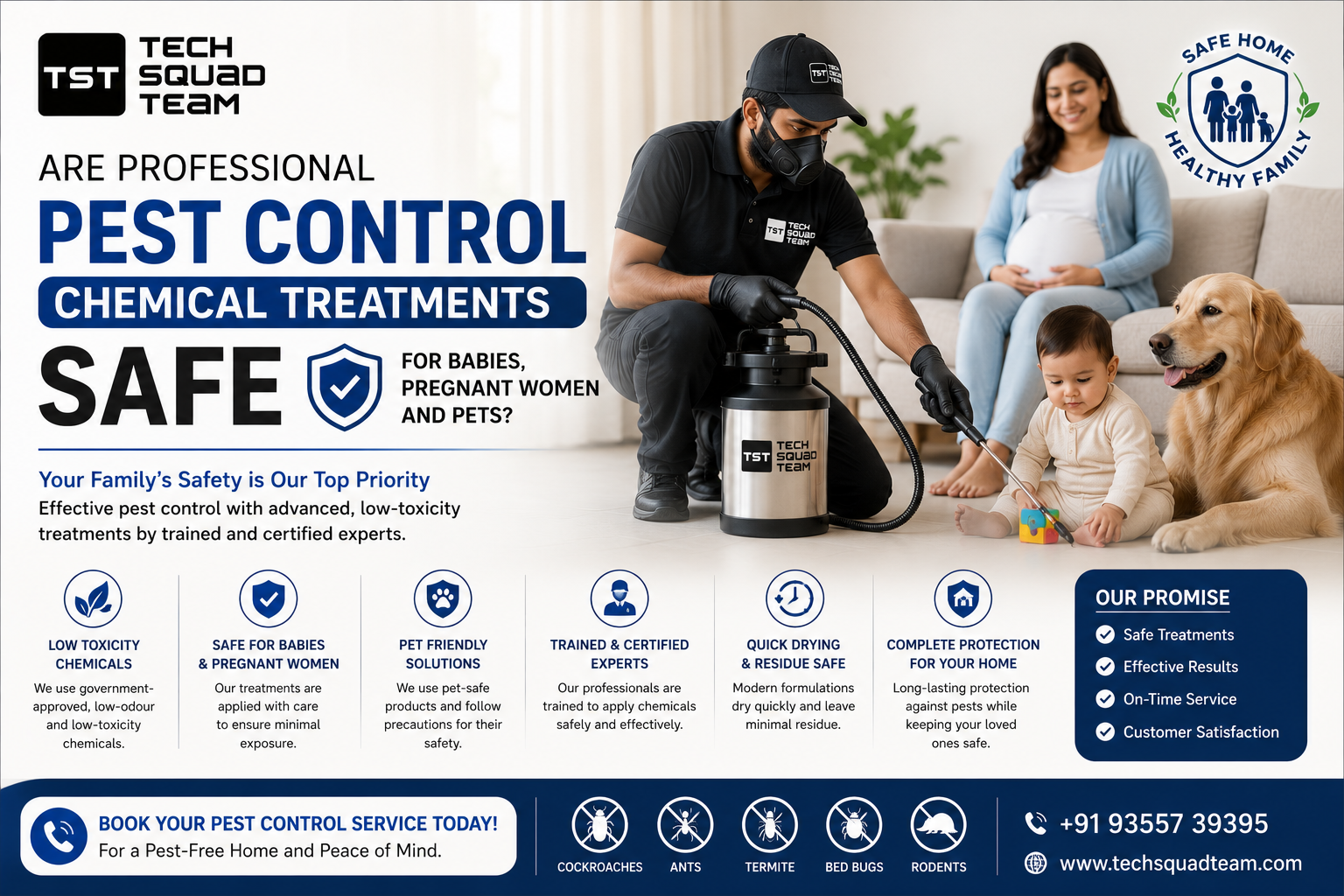
In short, if done properly, using the right materials and taking the right measures, professional pest treatment is usually safe for vulnerable family members. If you have been wondering whether pest control is safe for babies, the honest answer is that the risk is greater with negligent treatments or heavy DIY sprays. This guide discusses what is actually used, what to ask for and how to keep everyone safe before and after treatment.
Yes, when a licensed pest control provider uses targeted, low-toxicity products and you follow the recommended precautions and re-entry time, professional pest control is generally safe for babies, pregnant women and pets. People often ask whether pest control is safe for pets specifically, and the same rule applies. "Babies, pregnant women and pets are more sensitive to chemicals so take extra care and get a doctor's input.
Professionals are safer than a shelf full of sprays because of control. A skilled technician puts goods where pests move and people don't, applies the correct amount, and informs you just how long to stay out. Regulators have good reason to make vulnerable groups a special case. Exposure at critical stages of development may pose a higher risk to a developing baby and young children are more highly exposed because of their crawling and hand-to-mouth activity near treated floors. That's no reason to skip pest treatment. That’s an excuse to get it done right.”
They aren’t as effective as some of the professional cockroach extermination options, but they will help with a minor problem. If you’d like to try the milder steps first, there are home remedies for cockroaches. A real infestation will require a professional to clear it at the source.
Professional services usually involve targeted gel baits, insecticidal dusts in wall voids and controlled sprays. Baits and dusts don’t fly up into the air and stay put, so they are far safer indoors than foggers or heavy consumer sprays.
The chemical is only half of the story. When you ask a professional for child safe pest control chemicals, this is usually what they reach for. Here’s how the popular options rank up in safety:
● Gell baits. Don't put too many dots in cracks and fissures. They’re not airborne and the active ingredient is carried back to the colony by pests so there’s no need to worry about exposure to people and pets.
● Insecticide dusts. Used in wall voids, behind appliances and in outlets, not sprinkled on open floors, so they are out of reach of young hands and paws.
● Targeted therapies. Applied at ground level in certain zones rather than misted around a room, which minimizes what lingers in the air.
● Bug bombs and foggers. Best avoided in homes with babies or pets. They widely disperse the product and leave residue on surfaces and research has questioned their safety and even how well they work.
In the case of a severe roach problem, a professional cockroach control service will use gel baits and crack-and-crevice placement rather than open spraying, which is the safer way to go. If you want to know how much different treatments are, a pest control price list can give you an idea of the range of costs.
Tell the provider before treatment if you are pregnant or have a baby or pet in the home. Cover or store all food and utensils, remove pet bowls, toys and bedding and arrange for sensitive family members to be out during and immediately after the service. The right precautions after pest control treatment matter just as much as the steps you take before it.
A few minutes of prep makes a big difference:
● Be clear with the technician. Talk about the baby, the pregnancy, pets so they can choose low-toxicity products and safer placement.
● Clean the kitchen. Store food Cover surfaces Put away plates, cups and utensils
● Move pets and their things. Remove food dishes and toys and bedding and for fish cover the tank and turn off the air pump.
● Plan to escape. Make arrangements for the baby, pregnant family member and pets to be away during treatment and for the full re-entry time.
If you are wondering how long to stay out after pest control, follow the re-entry time set by your physician – usually a few hours for focused indoor treatments, longer for sprays or fumigation. Ensure the area is well ventilated before babies, pregnant women or pets come back. If there is still a chemical scent, wait longer.
Re-entry times depend on product and method. Sprays and fogs deliver more active substance into the air and need longer airing out than gels or baits, and adequate ventilation cuts the wait down a lot. If your provider uses an odourless pest control spray, it can be harder to judge by smell alone, so stick to the stated time. Open windows and run fans and don't rush sensitive family members back inside. Babies and cats will sit and crawl close to treated surfaces, so give the area extra time and wash off any low surfaces before allowing them back in. If you can still smell chemicals, it is not ready yet.
Yes. Look for low-toxicity, focused choices, like gel baits, enclosed bait stations, and a herbal pest control treatment or other botanical remedies. These keep the product sealed and away from open air which reduces the risk for newborns, pregnant women and pets.
Many providers offer less intensive, more targeted treatments for homes with vulnerable family members. Some of the safest include enclosed bait stations and non-repellent gels that stay where they are placed and are not inhaled. For flying pests, a professional mosquito control service can target nesting sites and outdoor areas instead of fogging the inside of the home. If you have wood damaging pests, talk to your termite control supplier about targeted application strategies to keep the chemicals localized.
The most common pest control side effects on humans and animals are mild, but worth knowing. Watch for coughing, watery eyes, skin irritation, nausea or unusual drowsiness in babies and vomiting, drooling, tremors or lethargy in pets. If any of these occur, remove the person or animal to fresh air and call your doctor or vet immediately.
Most treatments done properly create no reaction. But since newborns and dogs can’t tell you when anything seems wrong, it’s good to recognize the indications. In newborns, look for cough, eye or skin irritation, or unusual fussiness and tiredness. In pets watch for drooling, vomiting, shaking or lethargy. If you're worried about anything, get them into fresh air, call your doctor or vet and have the product details handy so the professional knows what was used. When in doubt a quick call to your paediatrician in pregnancy or with a newborn is always the right call.
Is general pest control safe if you have a newborn baby at home?
Pest control is safe for a newborn baby when a professional employs targeted low toxicity goods and you observe the re-entry time. Call for a general pest control service and mention the newborn. Keep the infant out until the area has been aired and the stench gone. If in doubt, check with your pediatrician.
Can I stay in the house for pest treatment if I am pregnant?
If you are asking whether pest control is safe during pregnancy, it is safer to go out during treatment and for the recommended re-entry time period. A professional roach control service can work around this and pregnant women should stay out of the area being treated until it has been fully aired out. Talk to your doctor about any specific concerns.
Are bed bug treatments safe for my pets?
Yes, if done correctly, with targeted application and correct timing of re-entry. A bed bug control professional will tell you how long to keep pets away. For more information on the pest itself, these bedbug myths are worth a read.
Are gel baits safer than sprays near children?
Yes, in general. Gel baits don't get airborne like sprays and stay in cracks and crevices. But placement is key, so they need to be placed where kids and pets can't get. This procedure works well in the Professional Cockroach Control for Severe Roach Problems.
When can I bring my baby back after mosquito fogging?
Follow the re-entry time as specified by the vendor. Ventilate first, fogging puts more product in the air than the targeted ways. In homes with babies, a professional mosquito control service that treats breeding sites, rather than fogs inside, is often the better option.
Rodent control is chemical free and suitable for family homes.
Instead of pesticides, traps and sealing are typically used for rodent control, which is good for family dwellings. A rodent control professional can emphasize non-chemical methods, and take care to place baits in tamper-resistant stations that children and dogs cannot reach.
When the task is done well, safe house and pest control are not a compromise. Select a licensed practitioner offering non toxic pest control services, tell them about your baby, pregnancy, or pets upfront, ask for targeted low-tox treatments, and follow re-entry guidelines. Do that and you have a pest-free home without risking the health of the people and animals you love.

TechSquadTeam Ground Floor, Plot No 118 Neil Rao Towers, Road No 3, EPIP Phase 1, Whitefield Road

Leave A Comment
Your email address will not be published. Required fields are marked *