 Cleaning Services
Long work weeks leave little room for chores. The home drifts into mess, and the weekend deep clean keeps getting pushed. The good news is that a clean home doesn't need a full day. A handful of small habits do most of the work. This guide covers the ones that actually hold up, with step-by-step how-tos, and flags the popular tricks worth skipping. These are house cleaning tips you can use in any Indian home, with notes for hard water and humid weather, which most of us deal with. We clean homes across India daily, so we know which tricks hold up. For more, browse our cleaning guides.
• The best home cleaning hacks build small habits. They aren't gadgets or miracle sprays.
• Wiping the bathroom right after a shower uses the steam to lift grime and slows mould in damp weather.
• Hard water is common across Indian cities. It leaves limescale fast, so treat stains early before they harden.
• Some popular hacks waste time. Vinegar and baking soda cancel each other out, and vinegar harms natural stone.
• Habit hacks handle upkeep. Deep cleaning, sofa extraction, and post-renovation dust still need pros.
One thing stands out from years on the job. The hacks that last are simple and habit-led. They cut effort by changing when and how you clean, not by adding equipment. Here are the standouts, with how-tos that work in any home.
This is the one most people skip. Right after a shower, everything is warm and steamy, so grime lifts with almost no scrubbing. In humid months and coastal cities, it also stops damp from settling into grout, which is where mould starts.
How to do it:
• Keep a squeegee and an old hand towel within reach of the shower.
• Right after you finish, wipe the glass, tiles, and taps while they're still warm.
• Use the towel you're about to toss in the wash anyway, so there's no extra laundry.
• Leave the exhaust fan running for ten minutes to pull out the moisture.
Thirty seconds here saves a long scrubbing session later. It also keeps bathroom mould from getting a foothold during the monsoon.
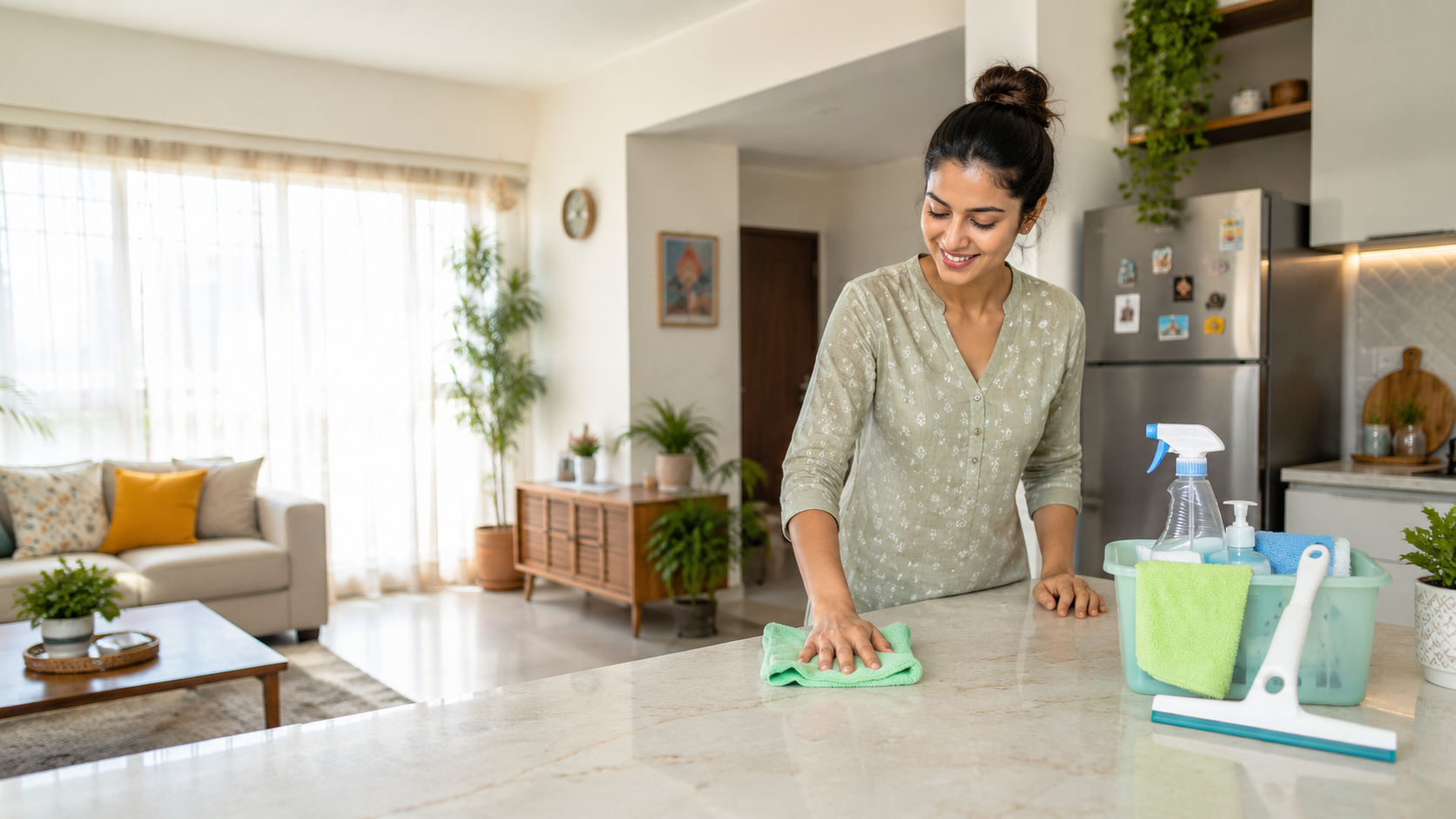
Store supplies where they get used. A spray and cloth in each bathroom, a set in the kitchen. The logic is simple. When the cleaner is right there, you wipe a surface instead of walking off and forgetting it. For a 2BHK or a multi-floor home, it saves trip after trip.
How to do it:
• Buy a couple of cheap plastic caddies.
• Stock each with a multipurpose spray, a microfiber cloth, and a sponge.
• Place one in every bathroom and one in the kitchen.
• Add a descaler to the bathroom kit, since hard water stains need it often.
A big mess freezes people. You look at it, feel tired, and walk away. A timer fixes that. Clean hard for twenty minutes, then stop. Knowing there's a clear end makes it easy to start, which is usually the hardest part.
How to do it:
• Set a timer for twenty minutes on your phone.
• Pick one task, like the kitchen counter or one bathroom.
• Work without distractions until it rings, then take a real break.
• Repeat once more later in the day if you have the energy.
Clutter slows down every clean. A simple habit beats it: keep a standing donation bag in the wardrobe. The moment you decide you're done with a shirt or an accessory, it goes in. When the bag fills, you drop it at a donation point. No big clear-out project, ever.
Hard water is the common tax across Indian cities. The water runs high on dissolved minerals, so limescale buildup on taps, showerheads, and glass appears fast. One study found TDS levels crossing 1,000 ppm in parts of Indian metros, well above the 300 ppm acceptable limit. The trick is timing. Fresh stains wipe off. Hardened ones need serious scrubbing or a strong descaler. Hard water stain removal is far easier when you don't wait.
How to do it:
• Wipe taps and glass dry after use so minerals don't dry into a crust.
• For fresh spots, a cloth soaked in diluted descaler clears them in minutes.
• For older limescale, wrap the tap in a descaler-soaked cloth for fifteen minutes, then scrub.
• Skip vinegar on natural stone or marble fittings, since the acid etches the surface.
|
Don't let limescale harden. Fresh hard water marks take seconds to wipe. Left for weeks, the same spots need heavy scrubbing or a professional descaler. Groundwater from borewells across many Indian states frequently exceeds safe mineral limits, which is why taps scale so quickly. A quick dry-wipe after use is the cheapest fix you have. |
Indian cooking throws off heavy oil. Over weeks, kitchen chimney grease turns sticky and traps dust. Harsh sprays struggle with it. Baking soda and hot water work better, cutting grease gently and cheaply.
How to do it:
• Remove the chimney filter and lay it in a wide tray.
• Sprinkle baking soda, then pour over hot water until the filter is covered.
• Let it soak for twenty to thirty minutes.
• Scrub lightly with a brush, rinse, and dry before refitting.
Keep a stack of cloths rather than reusing one across the house. A microfiber cloth traps dust and grime well, but dragging the same one from toilet to kitchen just spreads germs. A simple colour code fixes that.
How to do it:
• Keep a dozen or more microfiber cloths in rotation.
• Assign colours: one for bathrooms, one for the kitchen, one for general dusting.
• Wash them in hot water after each big clean.
• Never move a bathroom cloth to a kitchen surface.
This matters across India's humid stretches. During the monsoon, damp corners and grout breed mould quickly, and coastal cities like Mumbai and Chennai feel it year round. Air-drying leaves moisture behind. A quick wipe-dry removes it.
How to do it:
• After mopping or wiping a wet area, go over it with a dry cloth.
• Pay attention to bathroom corners, window tracks, and under the sink.
• Keep rooms ventilated during the day to cut trapped humidity.
• If black spots are already forming, treat the area before mould spreads into the grout.
Not every popular trick earns its reputation. Our own experience on the job flags a few that waste time or do damage.
• Vinegar plus baking soda. Mixed together they fizz and neutralise into salty water. The cleaning power cancels out.
• Vinegar on natural stone. It etches marble and granite fittings. Use a stone-safe cleaner instead.
• Newspaper on glass. In humid weather the ink smears and the paper leaves lint. A dry microfiber cloth beats it.
• Soaking wooden furniture. Over-wetting wood in monsoon swells the grain and invites mould. Wipe with a barely damp cloth.
• Industrial acids on taps. Strong acid clears limescale but pits the chrome. A proper descaler is safer.
Habit hacks keep daily mess in check. They don't touch deep grime. Construction dust from nearby building work, post-renovation residue, and a year of settled dust need machines and trained hands. If you're not sure where your home stands, these signs you need a deep clean help you judge. A full deep clean uses HEPA vacuums, steamers, and descalers that home kits can't match.
Soft furnishings are the other limit. A surface wipe won't pull dust mites and allergens out of a sofa or mattress. Those need extraction, as our carpet cleaning guide explains for fabric in general. The kitchen is a third case, since baked-on grease and chimney interiors sit beyond a quick wipe. Our deep kitchen cleaning guide covers what that involves.
How often should I deep clean my home?
Once a month works for most homes, given India's dust and humidity. Homes near construction or busy roads may need it more often. Between sessions, the habit hacks above handle upkeep. For the monthly reset, see why a professional deep clean reaches what daily cleaning misses.
What's the best way to remove hard water stains?
Wipe fittings dry after use so minerals don't crust. For fresh marks, a diluted descaler on a cloth clears them fast. For hardened limescale, wrap the tap in a soaked cloth, wait, then scrub. Our cleaning guides cover stronger fixes for severe buildup.
How do I keep my kitchen chimney and stove grease-free?
Soak the chimney filter in baking soda and hot water every few weeks, then scrub lightly. Wipe the stove after cooking while it's still warm. For baked-on grease and interior chimney grime, our deep kitchen cleaning guide shows what a full clean covers.
Can I clean my sofa or carpet myself or should I book a service?
Vacuuming and spot-cleaning help with surface dust and fresh spills. Deep-set dust mites, body oils, and old stains need hot water extraction. A home vacuum can't do that. Our carpet cleaning guide explains how extraction lifts what's buried in fabric.
How do I stop mould in bathrooms during the monsoon?
Wipe surfaces dry after use, run the exhaust fan, and keep the room ventilated. Catch black spots early before they spread into grout. For homes that already show signs of buildup, check these signs you need a deep clean.
Is a monthly professional clean really worth the cost?
For busy households, yes. It saves weekend hours, reaches hidden grime, and protects fixtures from hard water and grease damage. The hidden benefits of deep cleaning break down where the value sits.
Pick two or three hacks and make them routine. The after-shower wipe and the per-room caddy give the fastest payoff for the least effort. Treat hard water stains the day they appear, and dry your surfaces through the humid months. Those habits alone keep any Indian home in good shape between deep cleans.
When the dust, grease, or mould runs deeper than a cloth can reach, that's the line where habits end and professional help takes over. If you're weighing whether it's worth the spend, the benefits of professional cleaning make the case. Build the routine first, then call in the machines for the rest.

TechSquadTeam Ground Floor, Plot No 118 Neil Rao Towers, Road No 3, EPIP Phase 1, Whitefield Road

Leave A Comment
Your email address will not be published. Required fields are marked *