 Pest Control Services
If cockroaches feel like more of a fight in Bangalore than they did a few years back, that's not just in your head. A handful of things specific to how this city's growing, and how its infrastructure's aging, are working together to make cockroach problems genuinely harder to keep under control here than in a lot of other places. Here are the eight reasons behind it, and what actually helps.
Cockroaches breed fastest in warm, humid conditions, and Bangalore's climate just stays mild and humid most of the year rather than swinging into a proper cold season that would naturally knock the population back a bit. Cities with a real winter get that seasonal dip almost for free, no effort required. Bangalore doesn't get that break at all, which means a population treated in, say, March can rebuild itself just as easily by August, since the conditions never really stop working in their favor.
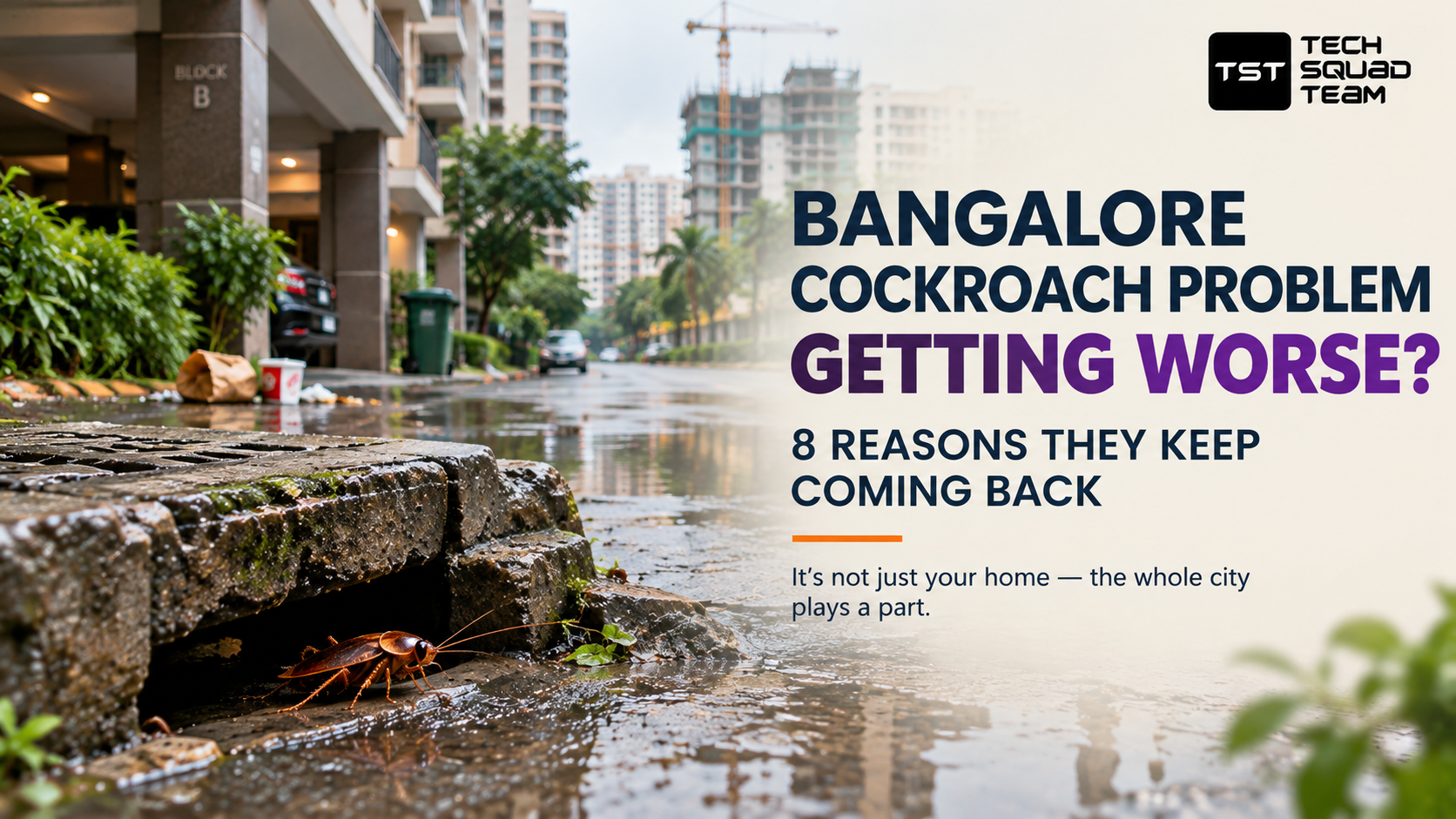
Bangalore's stormwater drains and sewer lines are, in a lot of neighborhoods, decades old and under constant strain, especially once monsoon hits. The city's own civic body has been pretty upfront that drainage gets tackled one section at a time rather than fixed citywide in one go, and waterlogging during heavy rain keeps popping up as a recurring problem in several areas. Damp, poorly maintained drains are basically a free base camp for cockroaches to spread from, especially into ground-floor units and buildings sitting near those drains.
Bangalore's construction boom with new apartment blocks, tech parks and road widening disturb soil and structures that were already home to pest colonies. When a site is excavated or a building is constructed next door, displaced pests don’t just disappear. They move into whatever is nearby standing. More often than not, the home or office right next to the disruption.
A lot of the newer residential growth in Bangalore, especially in IT corridor areas such as HSR Layout, Whitefield and other such apartment-dense areas, translates into large complexes with shared plumbing risers, basements and parking levels. These common systems allow cockroaches to move between units and floors using the building's own infrastructure so treating only your own flat does not really stop pressure coming in from an adjacent unit or from the basement two floors down.
Bangalore's got one of the densest concentrations of food delivery activity and cloud kitchens in the country, especially in tech-hub neighborhoods. More food moving through more kitchens, more packaging waste piling up in dense residential-commercial zones, it all adds up to more food residue sitting around for cockroaches, especially in buildings mixing ground-floor kitchens with residential floors stacked above.
Even setting aside the drainage infrastructure itself, monsoon waterlogging on streets, in basements, around building foundations, creates damp conditions right next to where people actually live. Cockroaches gravitate toward exactly this kind of moisture, and honestly, just a few weeks of standing water near a building's entrance or basement can noticeably ramp up pressure on the units above.
Cockroaches reproduce fast, egg cases laid before a treatment can still hatch afterward, and in a city with the density and constant construction activity Bangalore's got, new pests wandering in from outside is more or less a continuous thing here, not something that happens once and settles. A single treatment handles what's active right then, sure, but it doesn't touch any of the surrounding conditions still pushing new activity in.
Bangalore's mix of compact modern studios, older independent houses, and dense apartment blocks packed close together means more shared walls, more adjoining structures, more routes for pests to move between properties than you'd find in an area with more breathing room between buildings. A cockroach problem in one unit or building's got more neighboring paths to travel through here than it would somewhere less crowded.
Most of what's driving Bangalore's cockroach problem sits outside any single home entirely, aging drains, ongoing construction, dense shared buildings, so a one-time treatment inside your own unit is fighting conditions that reset from outside almost as fast as they're cleared. Cockroach control paired with a scheduled maintenance plan accounts for that ongoing pressure instead of treating every new sighting like its own isolated mystery. For apartment buildings specifically, coordinating pest control services with building management, instead of every unit booking on its own, tends to get better and longer-lasting results, given how much of this pressure actually travels through shared building infrastructure.

TechSquadTeam Ground Floor, Plot No 118 Neil Rao Towers, Road No 3, EPIP Phase 1, Whitefield Road

Leave A Comment
Your email address will not be published. Required fields are marked *